
Which Stablecoin Is Safer for Business, USDT or USDC? A Practical Guide
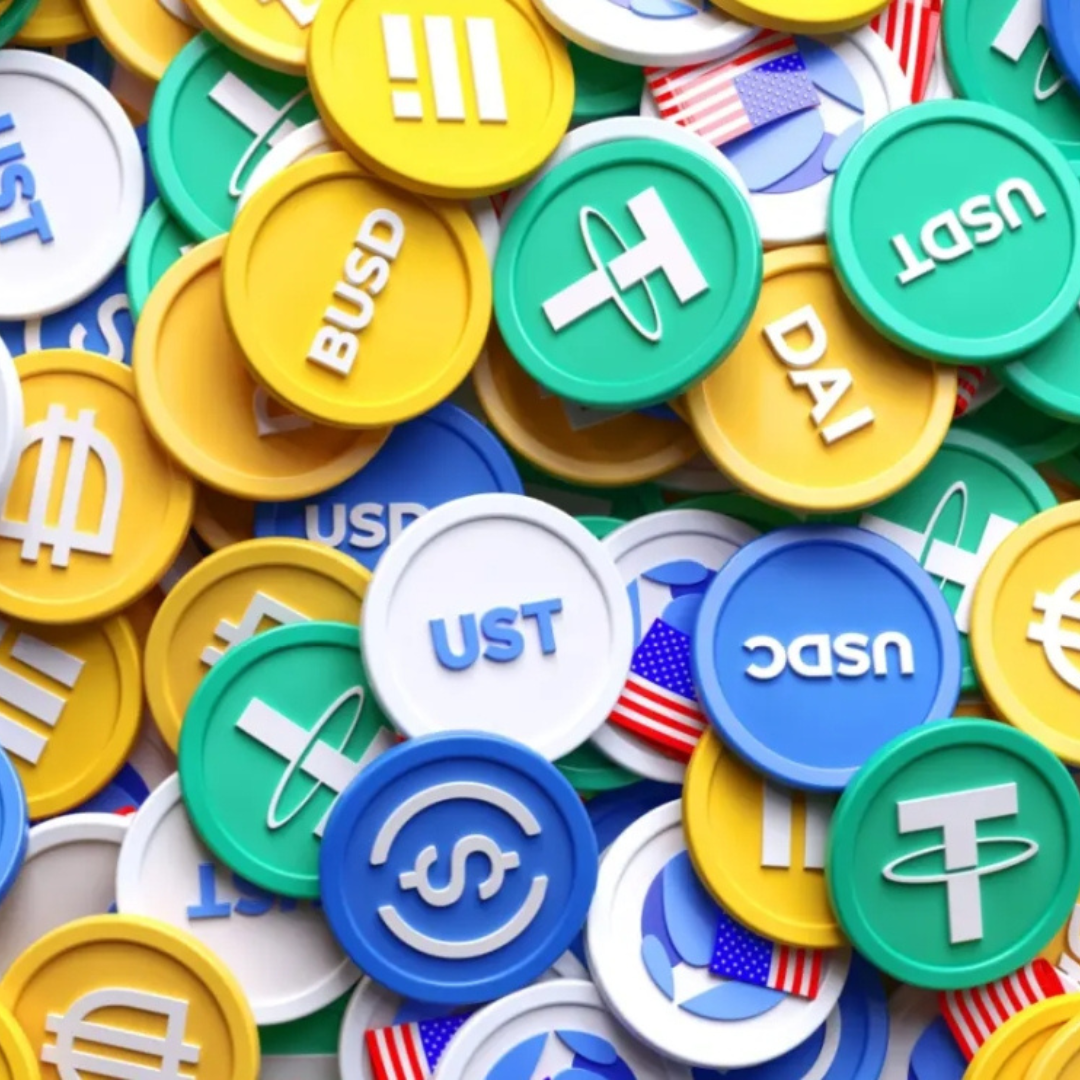
In this guide, we explain how USDT and USDC differ in backing, regulation, usage and real-world risk, so small businesses can pick the right stablecoin for payments and cash flow.
Stablecoins are no longer fringe “crypto stuff.”
They are rapidly becoming payment rails for SMBs.(McKinsey & Company+2World Economic Forum+2)
When you pay contractors, suppliers or clients globally, the stablecoin you choose matters.
We’ll cover:
- What USDC & USDT are
- Key data and stats on each
- How backing and regulation differ
- Why companies favor one vs the other
- The risks SMBs must understand
- Practical decision-making advice
TL;DR
- USDC: Stronger regulatory profile, clearer backing, fewer unknowns.
- USDT: Larger global reach, highest liquidity, more risk/complexity.
- For U.S. business payments + compliance → > USDC.
- For high-volume international payments → > USDT (with caution).
1. What Are USDC and USDT?
USDC (USD Coin) – Issuer Circle Internet Group
- Backed 1:1 with U.S. dollars and U.S. Treasuries. (IMF Connect+2Circle+2)
- Supported across 28 blockchain networks (as of Sept 25, 2025) including Ethereum, Solana, Polygon, etc. (Circle)
- Circulation: reports show “over $60 billion” circulating as of March 2025. (Intercontinental Exchange+1)
- Analysts project USDC supply could triple by end-2027 (to ~USD 220 billion) as regulation tightens. (The Block)
- Real-world corporate adoption: Mentioned by McKinsey as part of “next-gen payments infrastructure”. (McKinsey & Company)
USDT (Tether) – Issuer Tether International S.A.
- Circulating supply: ~US$ 157-163 billion (October 2025 data) → making it largest stablecoin. (CoinLaw+1)
- Market dominance: Over 59.9% of global stablecoin market (Oct 2025) vs USDC ~25.5%. (CoinLaw)
- Reserve attestation (June 30, 2025): Assets backing ≈ US$ 162.6 billion vs liabilities ~US$ 157.1 billion → surplus ~US$ 5.5 billion. (Contentful+1)
- Diversified reserve assets: U.S. Treasuries ~81.5% of backing; “other assets” (crypto + precious metals) ~18.5%. (IMF Connect+1)
2. Backing & Reserve Transparency
FeatureUSDCUSDTReported backingFully backed by cash and Treasuries (≈93% of backing assets) per IMF report.~81.5% backing in Treasuries + repo; ~18.5% other assets.Audit / attestationMonthly reserve audits (by Deloitte) claimed by Circle.Quarterly attestations via BDO Italia; scope limitations noted.Reserve size / market shareCirculating supply ~US$ 60 billion (Mar 2025) and growing.Circulating supply ~US$ 157-163 billion (Oct 2025) and growing.TransparencyIssuer U.S.-based, regulated environment, high visibility.Issuer offshore (El Salvador registration) with litigation ongoing; transparency improving but historically weaker.
What this means for SMBs:
- The clearer the backing + audit + issuer structure, the safer your “digital dollar” acts as cash.
- USDC wins in clarity and regulatory alignment.
- USDT wins in scale and liquidity, but carries additional complexity.
3. Regulation & Compliance
- Global stablecoin market size: > US$ 245 billion early 2025. (Worldpay+1)
- Major regulatory shifts: U.S. “GENIUS Act”, EU’s MiCA, Hong Kong stablecoin bill. (TRM Labs)
- USDC: Issuer headquartered in U.S., subject to U.S. laws and likely banking/regulatory oversight.
- USDT: Historically offshore, with regulatory scrutiny (CFTC fine in 2021) and audit limitations. (Wikipedia)
For SMBs:
If your business is subject to audit, tax oversight, bank partnership, you’ll prefer the “cleaner” regulatory profile (USDC). If you operate globally across high-cross-border volumes, you may accept more liquidity risk (USDT) but need controls.
4. Adoption & Liquidity
USDC
- Supported on 28 blockchains (Sept 2025). Circle
- Analysts: USDC supply forecast to grow ~220 billion by end-2027. The Block
- Use-cases: Corporate payments, settlement rails (Visa, Stripe etc). Worldpay
USDT
- $128 billion 24-h trading volume (Oct 2025). CoinLaw
- 82.5% of global stablecoin trading volume (Q3 2025). CoinLaw
- Widely accepted in Asia, LATAM, Africa; heavy usage for FX conversions and cross-border remittances.
- Academia: Tether’s large holdings of U.S. Treasury Bills (~$98.5 billion) make it one of the largest non-sovereign buyers of U.S. debt. arXiv
SMB insight:
For cross-border contractor payments or supplier payouts where local currency conversion matters and speed/acceptance matter, USDT is hard to beat for liquidity.
5. Which Stablecoin Should SMBs Use?
For a U.S.-based SMB (or using U.S. banking/partners):
- Use USDC. Clearer audit trail, regulatory comfort, easier for accounting and bank reconciliation.
- Ideal for domestic payments, U.S. contractors, invoicing to U.S. clients.
For global payments (contractors/suppliers in Asia, Africa, LATAM):
- Use USDT, acceptably stable, highly liquid, globally accepted.
- But: maintain strong controls, e.g., track conversions, counterparties, redemption paths.
Hybrid workflow (recommended):
- Receive payments in USDC (for trust/compliance).
- Convert part to USDT when paying global contractors/freelancers.
- Monitor daily: redemption fees, gas/tokens, network fees.
6. Risks SMBs Should Know
- Peg risk: While rare, stablecoins can lose peg under extreme stress (e.g., algorithmics). Both USDC & USDT are fiat-backed, but USDT holds more “other assets”.
- Reserve transparency: USDT’s attestation reports have limitations (point-in-time only) and ongoing litigation. Contentful
- Network risk: Using slow blockchain networks can inflate fees and settlement times, choose Solana/Polygon where available.
- Conversion risk: Converting stablecoins into local fiat may incur FX spreads + counterparty risk.
- Regulatory risk: Stablecoin regulation is evolving; issuer or business models might shift. TRM Labs
- Operational risk: Wrong wallet address, token contract mistake, mix-up between e.g., USDC vs USDC-variant, check carefully.
7. Practical Steps for SMBs (How-To)
- Evaluate your payment flows: domestic vs global, how many vendors/contractors, currency exposure.
- Select your primary stablecoin: If most payments domestic/U.S. → pick USDC. If mostly global → include USDT.
- Choose networks: Use Solana or Polygon for cheaper/faster settlement (supported by both coins).
- Set up wallet & banking compliance: Use business wallet, KYC/AML compliant service.
- Set conversion rules: e.g., receive in USDC, convert to USDT for global payouts; lock FX when needed.
- Track settlement & audit trail: Keep records of minting/redemption, back up invoices, ensure you can show audit trail for accounting.
- Monitor regulations: Stay aware of stablecoin legislation, jurisdiction-specific rules for payouts and tax.
8. Final Recommendation
For a small business focused on predictable cash flow, compliance and domestic operations, USDC is the safer choice.
For global operations with heavy cross-border payments, contractors/suppliers abroad and need for highest liquidity, USDT is viable, but you’ll need tighter controls and a risk-aware workflow.
At Nerdpay, we support both, enabling you to automate AR, follow-ups, and payment flows using the right stablecoin for your business. Choose based on your payment geography, regulatory footprint and risk tolerance.
FAQs
Q1: Is USDC backed 1-for-1 in cash?
A1: According to the IMF, USDC reserves are ~93% overnight repo + U.S. Treasuries, and ~7% cash. IMF Connect
Q2: Has USDT ever failed its peg?
A2: There have been moments (e.g., during FTX collapse) where USDT dipped slightly (to ~96 cents) due to liquidity pressure. Investopedia
Q3: Can I change between USDC and USDT easily?
A3: Yes,many crypto exchanges/wallets allow you to convert; but be careful of fees, spread, network congestion and KYC rules.
Q4: Do banks accept stablecoins like USDC or USDT?
A4: Some banks and payment processors now support stablecoin settlement (via partner networks). USDC offers stronger bank-friendly profile; USDT acceptance varies by region and bank.
Nerdpay helps small businesses automate accounts receivable, send smarter reminders, and collect payments fasterwithout awkward calls.

Loved by SMBs Everywhere
From startups to growing businesses, teams rely on Nerdpay to keep cash flow nerdishly smooth.
"With Nerdpay, invoicing feels effortless and payments arrive on time. It’s like having an AR sidekick built right into our workflow."
"The automation does the heavy lifting. We save hours every week while keeping client relationships stress-free."
"Nerdpay turned our messy collections process into something predictable. Cash flow finally feels under control."
Ready to Nerd Out on Cash Flow?
Discover how Nerdpay helps SMBs automate accounts receivable, speed up collections, and keep cash flow predictable.